

Uncanny brands
On simulacra and the social media bandwagon.
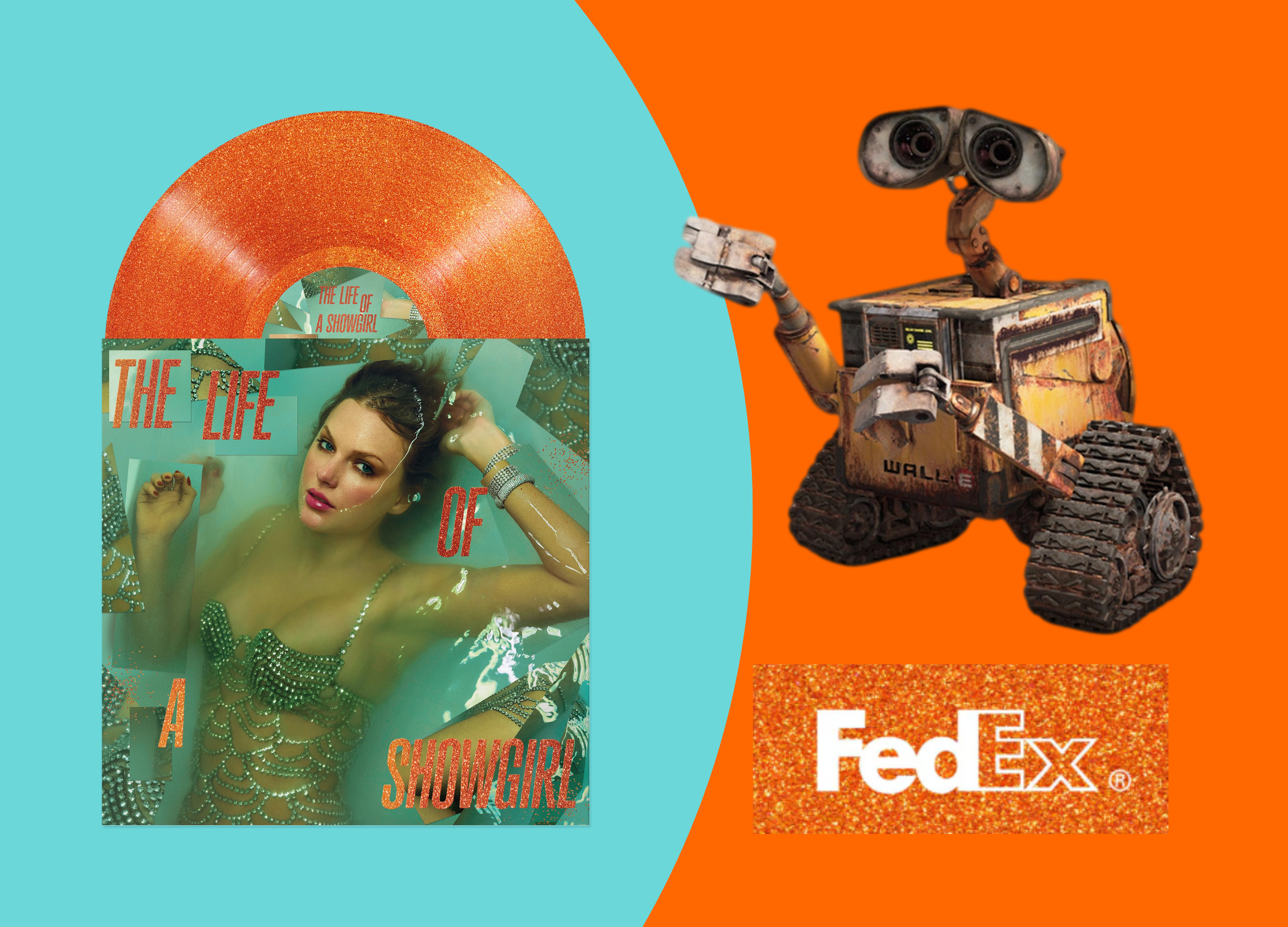
In this piece: Taylor Swift’s Life of a Showgirl; orange logos everywhere; Oreo’s 2013 blackout moment; Baudrillard’s hall of mirrors; the brand uncanny valley.
When Taylor Swift announced her new album, Life of a Showgirl, last week, the internet turned orange. Within hours, Dunkin’ had put a new filter on its logo. Duolingo’s owl got a new outfit. Even FedEx — yes, FedEx — recast itself in glittery citrus.
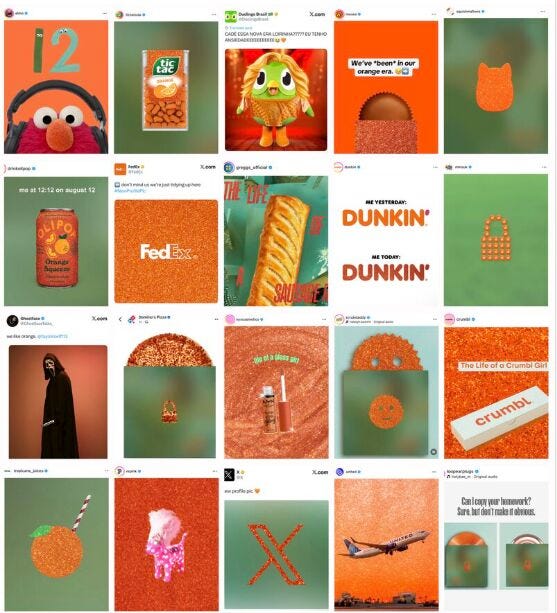
Source: Chloe PerkinsBrands hopping on the bandwagon is now a predictable cycle. The current playbook goes back to Oreo’s “Dunk in the Dark” during the 2013 Super Bowl blackout. That worked because it was fast, funny, and actually tied to what Oreo sells: cookies and milk.
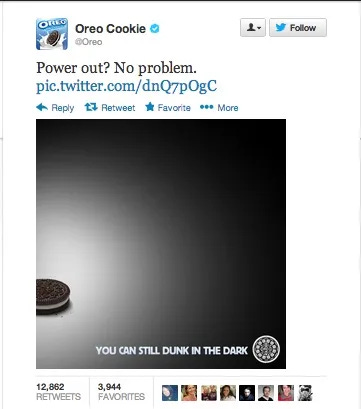
Fast forward a decade, and what started as reactionary has turned into a reflex. The question of relevance isn’t “can we add something meaningful?” It’s “can we post something, anything, now?”
Meanwhile, the marketing world is collectively rolling its eyes. As Kieran Hughes, a strategist at marketing agency Dentsu, put it:
This isn’t cultural marketing. It’s cultural desperation. Real cultural marketing means understanding why something matters, not just that it’s trending. It’s about finding genuine connections between your brand and the moment, not slapping your logo on whatever colour Taylor Swift is using this week.
He’s right. But I think the point we’ve reached is less about lazy marketers (in fact, quite a bit of work goes into building brand guidelines and decision matrixes for social media). It’s more about the mirror it holds to the culture we’re trying to tap into.
French philosopher Jean Baudrillard wrote about simulacra: the idea that signs and symbols can detach from reality and start referencing only each other. Madison Huizinga writes about how this plays out on social media:
Social media has become less of a fabricated version of our own lives and more of a collaborative, self-referential simulation that we adorn with glimmers of our offline lives to conceal its simulative qualities. The internet - and the visuals, behaviors, and memes that compose it - has become a self-contained ecosystem, a neverending inside joke - recycling material, referencing its own wits, and feeding off itself like a snake eating its tail until there are few shreds of the “real” left.
That’s what the Swiftie pile-on starts to look like. An orange album cover leads to orange brand posts which lead to orange memes, until the meaning collapses. It’s brands talking to other brands in a hall of mirrors until, suddenly, Taylor Swift is beside the point.
Repetitive? Yes. But why does this make so many of us cringe? To keep the mirror analogy going, I can’t help but think about the concept of the “uncanny valley” that I hear often, being steeped in Silicon Valley and the tech world.
The uncanny valley is the eerie discomfort you feel when something artificial looks almost human, but not quite. A robot that smiles just a little too slowly. An AI-generated face where the teeth don’t line up (P.S. this happened to me when I tested an AI video avatar. I deleted it out of disgust before thinking to grab a screenshot).
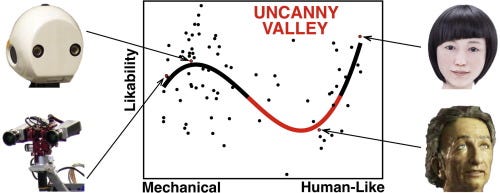
Source: Maya B. Mathur, David B. Reichling, Navigating a social world with robot partners: A quantitative cartography of the Uncanny Valley, Cognition, 2016.The closer the mimicry gets to “real,” the more unsettling the effect is when it fails.
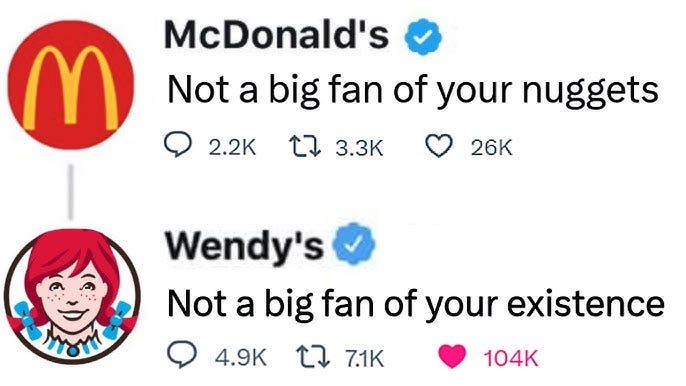
That’s what’s happening with brand behavior online. For years, brands have been trying to act like people. To talk like us. Joke like us. Meme like us. And often, they pull it off well enough (see: Wendy’s previous hot-streak).
Researchers have looked at this phenomena and identified three different ways consumers humanize brands:
Anthropomorphism, the first of these subdomains, takes a human-focused perspective, examining consumers' perceptions of brands as having human-like qualities. [This includes] brands as having (1) human-like features or physiognomy (as when one perceives a handbag as having features that resemble a human face); (2) a human-like mind (as when one infers that a computer has its own intentions and motives); and (3) a human-like personality (e.g., the brand is friendly).
A second stream adopts a more self-focused perspective, examining not how the brand is like people in general, but rather how it is specifically like oneself…
A third subdomain takes a relationship-focused perspective, examining how consumers' relationships with brands can resemble their relationships with people.
For people who create for a living, the mirror reflects back: seeing a logistics company cosplaying in orange and glitter, we’re reminded of how synthetic this all can be.
Of course, most consumers don’t care. They scroll, they see orange, they hit “like,” they move on. For them, these posts still “work” in the most minimal sense. But for those of us inside the machine working its levers — marketers, product designers, founders — it lands differently. We see the programming. We know what’s being optimized for.
That’s why it bothers us. Not because consumers particularly care, or because this kind of thing in isolation affects a brand’s reputation, for the most part (although, as Nathan Jun Poekert points out, the cumulative effect of these upper-funnel strategies can influence brand consideration). It bothers us because it reflects back the truth of what we all do: sometimes, we’re just generating noise out of necessity.
Thank you for the shoutout! Great piece :)
I think that most people actually DO care about about "brandwagon" activity, or at least they perceive it in a negative fashion. For the luminaries like us pulling the levers, it may be a conscious reaction but the typical consumer does feel it and it likely feels icky.