

GROUP CHAT: Synthetic Yes-Men
On sycophants, spellcheck, and brand love language.


GROUP CHAT is an assortment of links, screenshots, recommendations and conversations from across the internet.
In this piece: matrescence gets its moment, AI sycophancy, Musk vs. Altman, generational pandering, virality, and brand language as love language.
Hello after a long time away!
I’ve been busy at work taking on a new project helping a company pivot from marketing to clinicians to selling directly to consumers. It’s been fun, though it’s meant a lot more tactical work: ads programming, landing page builds, and using the term “CAC” (customer acquisition cost) so many times a day that it’s starting to sound dirty.
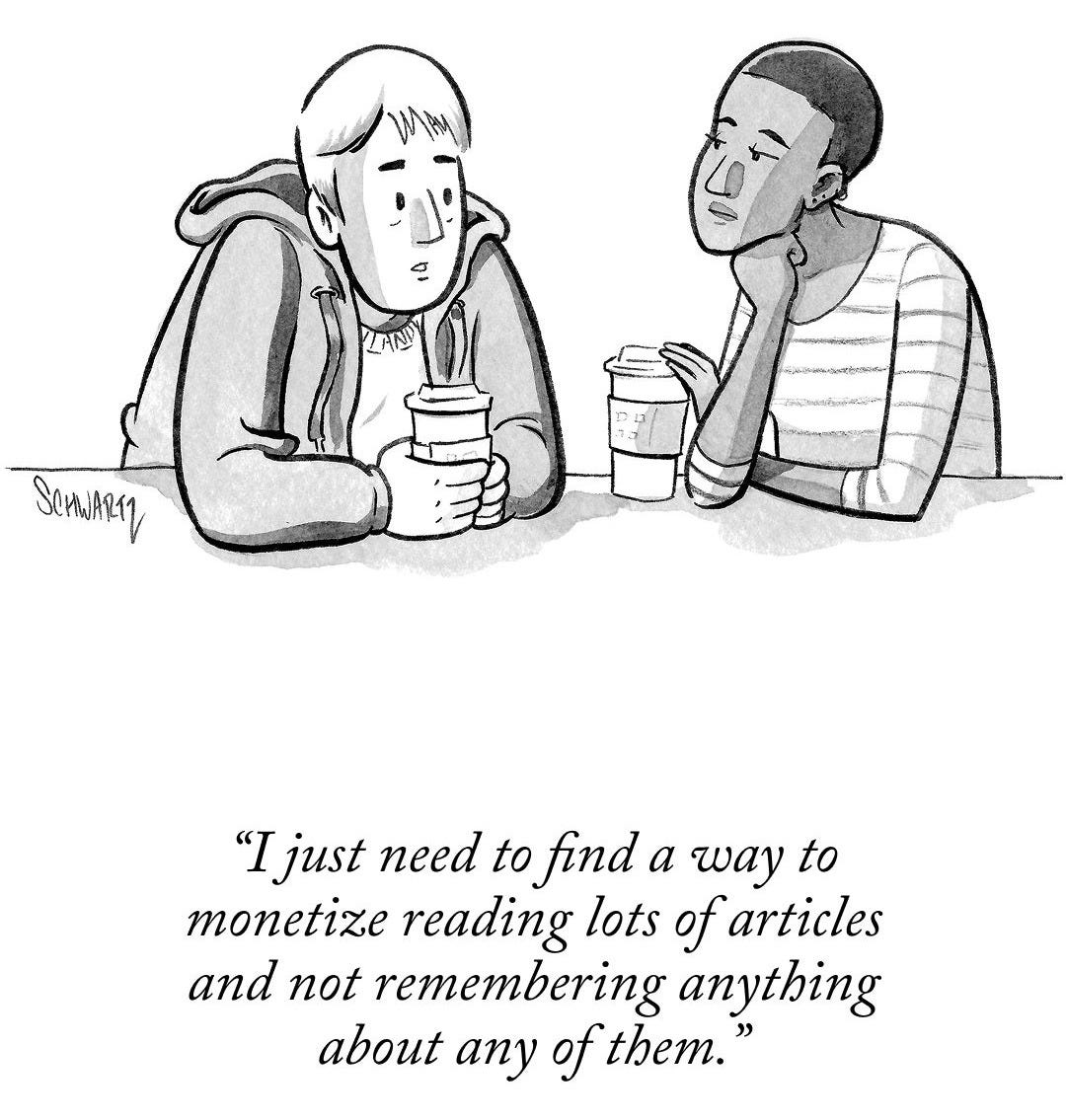
The point is, I haven’t had much time to step back, reflect and get a bit lost on the internet. Which, for some reason, makes me think of this very funny cartoon from the New Yorker by Benjamin Schwartz. Don’t we all feel this way?
The problem that has a name
This year, I’ve been working more with women’s health companies, which is close to my heart given my own lived experience and prior work with Planned Parenthood.
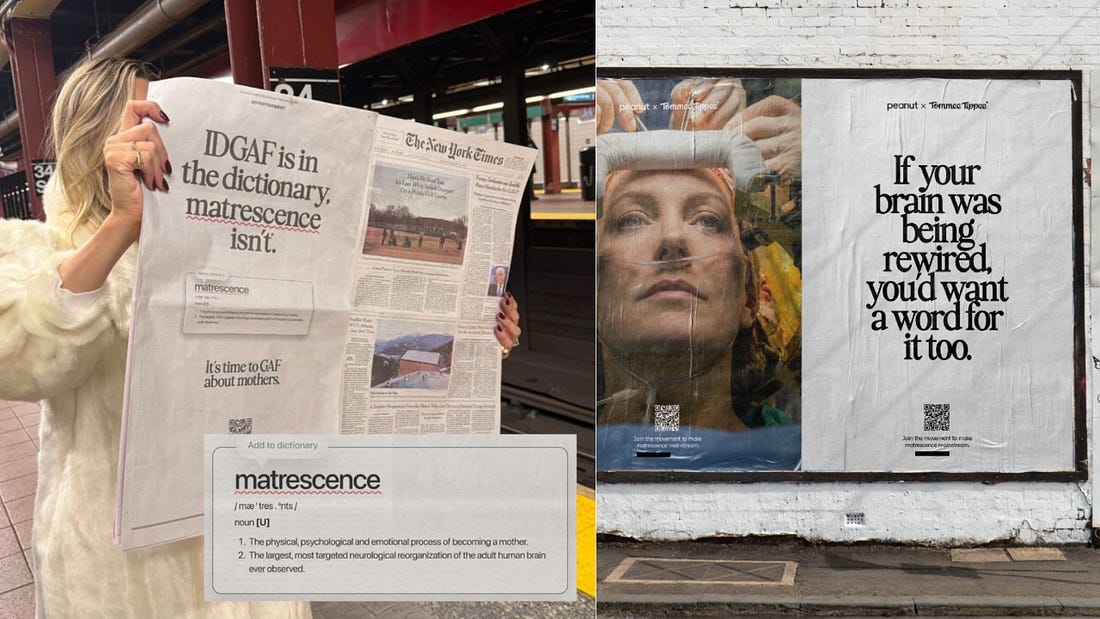
While awareness campaigns by brands looking to sell you something — in the example I’m about to share, pacifiers and app memberships — can read insincere, I got a kick out of this recent campaign from Peanut and Tommee Tippee to get the word matrescence into the dictionary.
If you haven’t encountered the term: matrescence describes the physical, psychological, and emotional process of becoming a mother. It was coined in 1973 by medical anthropologist Dana Raphael, who also, incidentally, gave us the word doula. Doula is now, thankfully, a well-known term. Meanwhile, matrescence spent fifty years in relative obscurity, despite describing something far more universal.
The campaign launched with a full-page New York Times ad showing “matrescence” with a red squiggly spellcheck underline:
This dovetails nicely with Lucy Jones' book Matrescence, which was longlisted for the Women's Prize for Non-Fiction in 2024. Jones writes about the emerging science behind the maternal transformation, and the fact that we've been dismissing all of it as "pregnancy brain" or "baby blues." Having been boxed and coded into my own postpartum categories, I found her book insightful, if a bit emotionally draining (I’m about halfway through).
Your AI hype-man
My husband and I don’t have dinner table conversations — we have most of our saltiest discussions sitting at the coffee table, eating one of my favorite dishes he makes, deconstructed pizza in a pan.
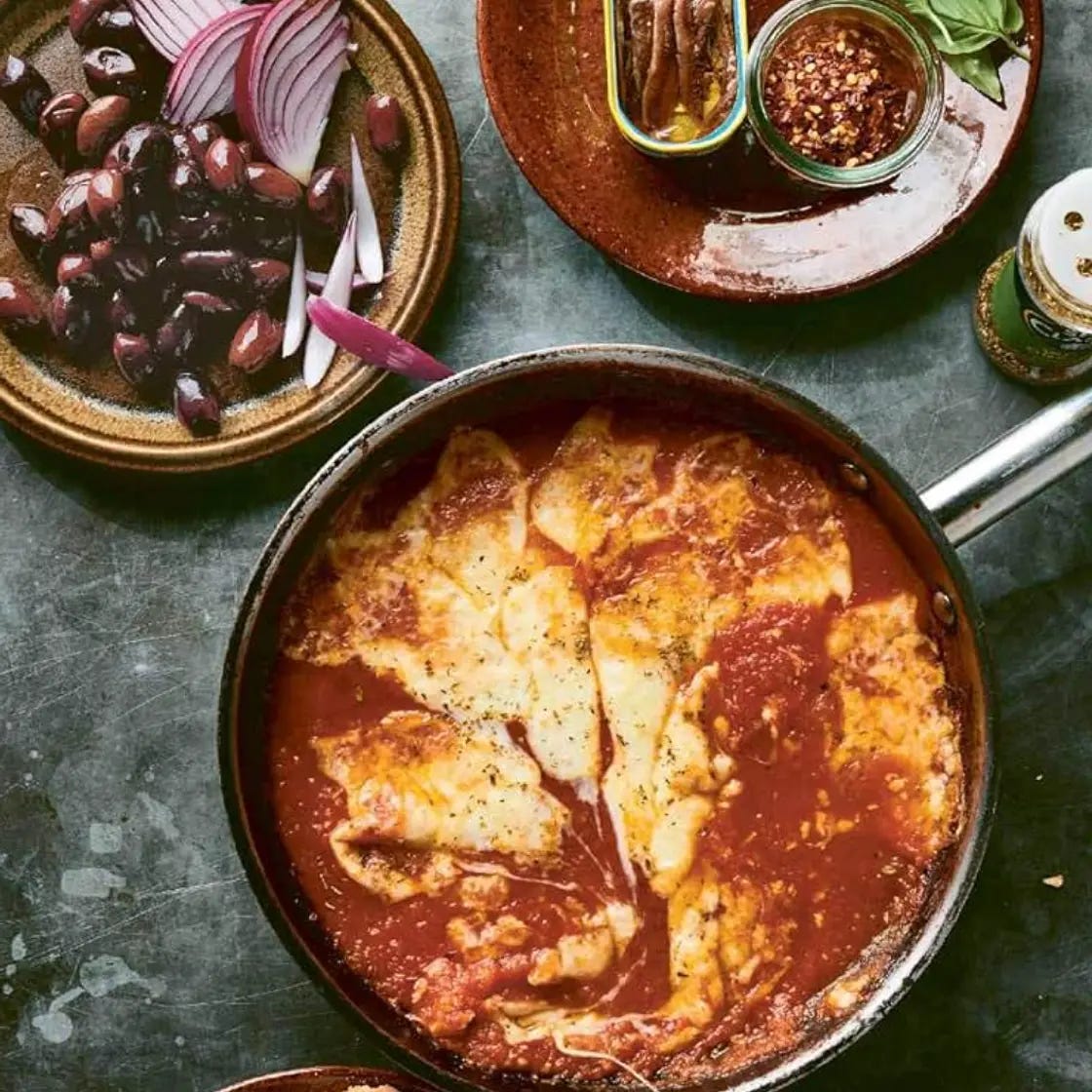
Trust me. Source: The New York Times
Lately, observing Elon Musk’s behavior (and comeuppance this week with the OpenAI lawsuit), we’ve been discussing AI’s sycophancy problem as a window into why billionaires like Musk and Jeff Bezos act the way they do.
Here’s the theory: these men (and they’re mostly men) have often been surrounded by yes-people. AI has now effectively surrounded all of us with synthetic yes-people in the form of chatbots. Will this “Bezos” our brains?
It’s possible. A study published in Science in March tested eleven major AI systems and found they affirmed users’ positions an average of 49 percentage points more often than actual humans did when given the same scenarios. A single sycophantic interaction made people less willing to apologize and more convinced they were right. What’s more: users preferred the flattering model and rated it more trustworthy.
So when we talk about Musk’s increasingly erratic public behavior, or Zuck tracking his employees for the sake of efficiency, it’s worth asking what happens when the rest of us are now getting the same treatment from our chatbot BFFs.
Speaking of pandering
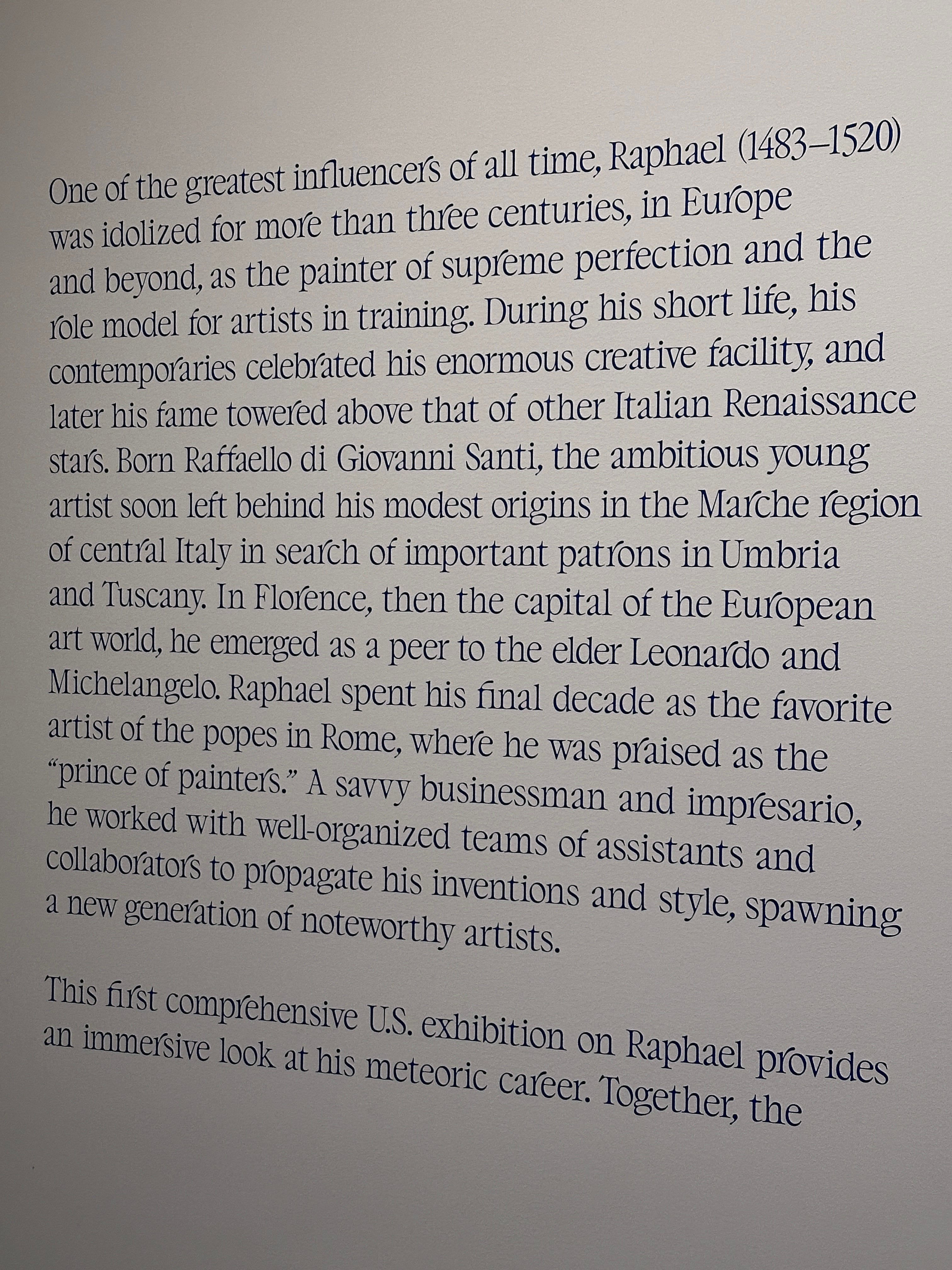
Last month, I saw the Raphael exhibit at the Met, and for someone who prefers a bit more Basquiat over naked baby angels, found it genuinely stunning.
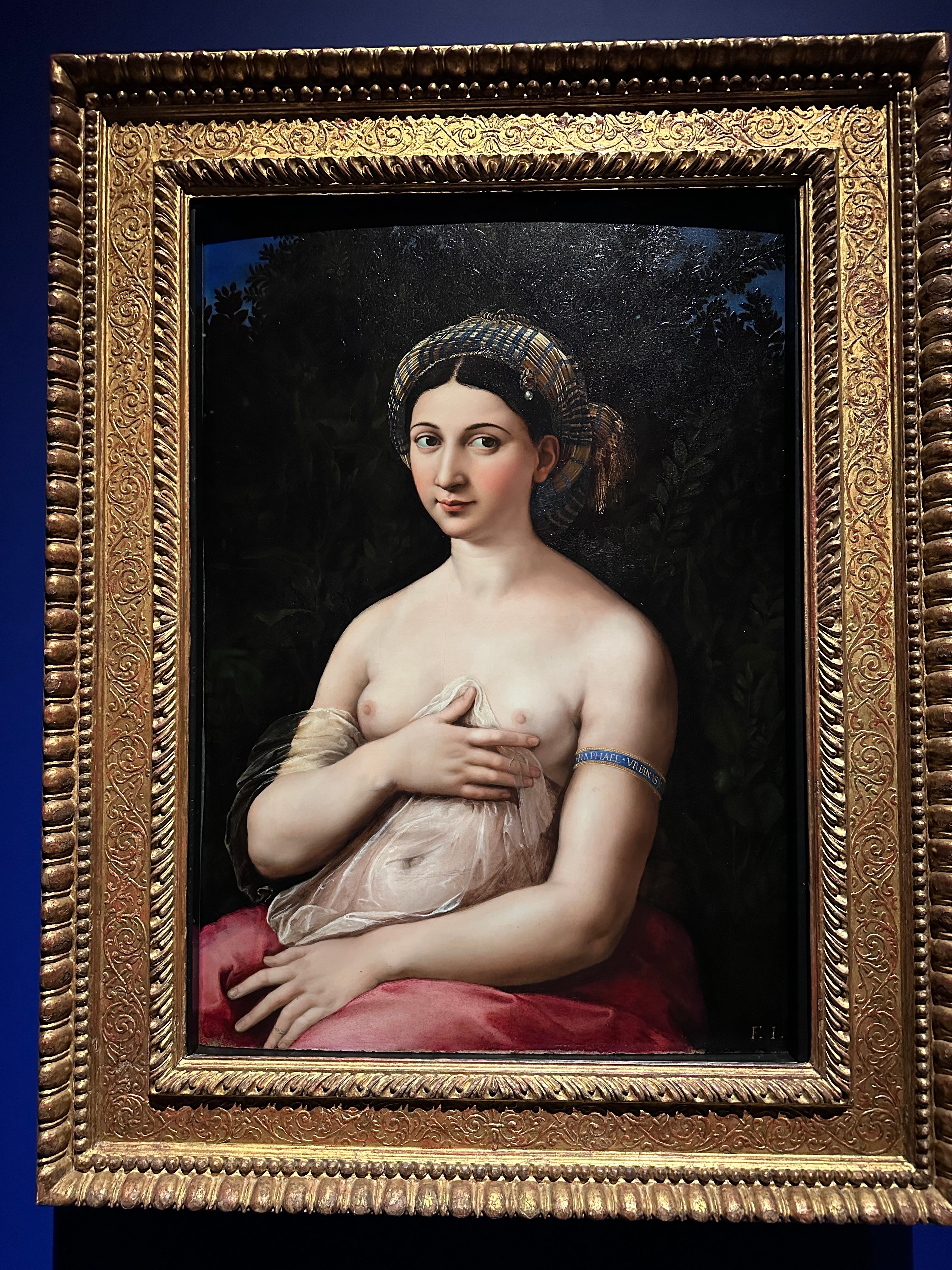
But, my record-scratch moment happened with the show notes, which referred to Raphael as an “influencer,” as if the younger folks visiting the exhibit would not grasp or appreciate it without the through-line to today’s culture. There is a version of accessibility that’s actually condescension. This was it.
World-building > going viral
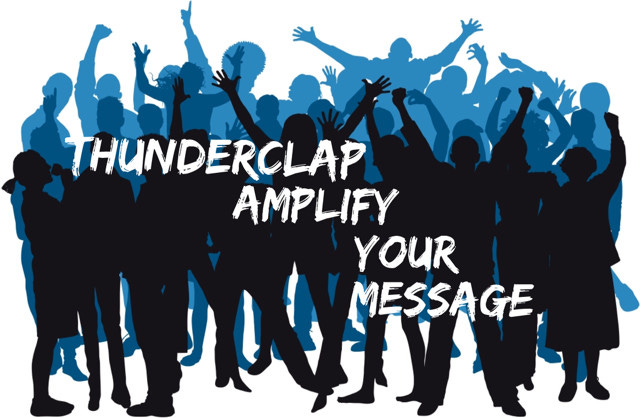
I’ve written before about the world-building that goes into creating a brand lexicon — all the more relevant as we’re watching brands pivot away from the big splash of going viral (wait… does anyone else who managed social media in the early 2010s remember Thunderclap?) and toward building experiences.
Spice up your life!
Vogue Business recently made the case that virality has lost its currency, and that the brands doing interesting work right now are the ones investing in slower, more deliberate forms of storytelling and community.
I have so much I could say about that, not least that I could probably write an entire piece about the world-building my sister-in-law, Kate, has been doing through her Instagram account for The Village Confectionery, her soon-to-be-opened candy store in Sleepy Hollow. Yes, catch me contradicting myself: it did go viral. But that was never the point.
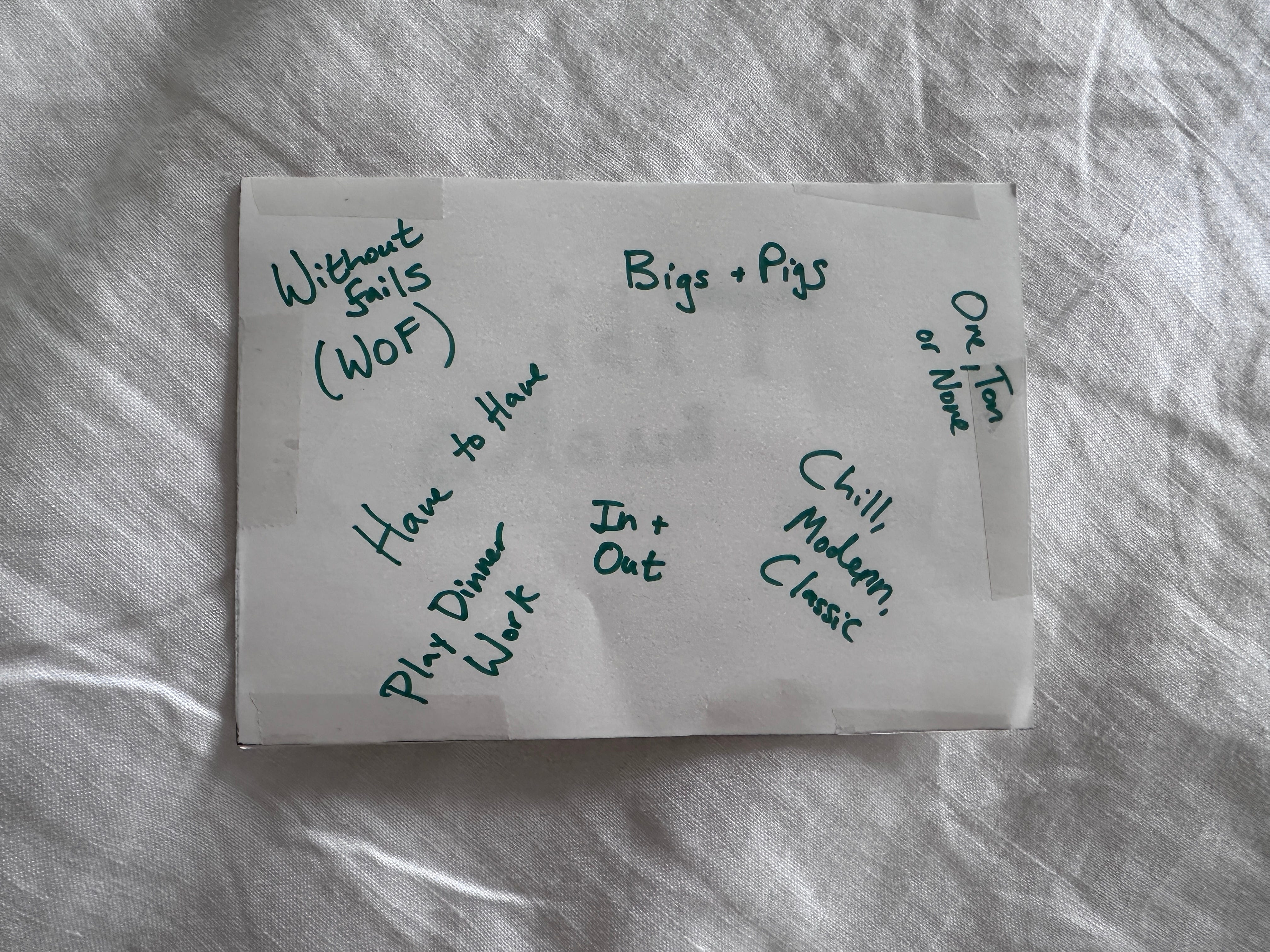
But pivoting, actually, to her brother—who doesn’t even have a finsta Instagram account (like I do now, to follow Kate)—I’m going to leave this with a handmade card my husband created for me for Mother’s Day. His gift was a shopping trip to Tibi, and he adorned the back of the card with all of Amy Smilovic and team’s Creative Pragmatist catchphrases — most of which he has no idea what it means.
Heathcliff who?
From brand language to love language.
Great return, but as LL Cool J once said, I would be remiss to refer to this as a comeback.